People ask this all the time, and the answer never really settles. Is it only CCD cameras? Anything before 2008? Is there a megapixel limit? Every few weeks the same debate starts over again.
I've started to think it never gets resolved because we're asking the wrong question.
Most of the answers focus on the camera itself: the sensor, the year it was made, the brand, the specifications. But I don't think that's what people actually fell in love with. What mattered was the file.
A digital photograph is a file before it's a picture. I don't mean that as a technical point. Before anyone sees an image, light has already been translated by a sensor that can only record so much. Color becomes numbers. Detail becomes something else. Every digital photograph begins with loss.
That isn't a flaw. It's simply how digital photography works.
For years, camera technology has been moving in one direction: more detail, less noise, cleaner files, more accurate color. Now AI has pushed that even further. We can remove objects, smooth skin, reduce noise, sharpen edges and fix almost anything after the fact. The goal is often to erase the evidence that the image was ever made by a machine.
That's never been the part that interested me.
Painters spent much of the twentieth century moving in the opposite direction. Instead of hiding the brushstroke, they let it remain visible. Some worked with damaged surfaces, rough materials, or visible imperfections because those things became part of the work instead of something to conceal.
Digital photography has its own surface.
Noise, color shifts, blooming highlights, compression, banding, softness—these aren't just technical defects to me. They're the visible behavior of a sensor working at its limits. They tell you something about how the image came into existence.
That's the part I find interesting.
One photograph I keep coming back to shows two people carrying surfboards along the shoreline at dusk. There's a pier disappearing into the distance and just enough light left to separate the water from the sky.
Described that way, it's a photograph you've probably seen hundreds of times.
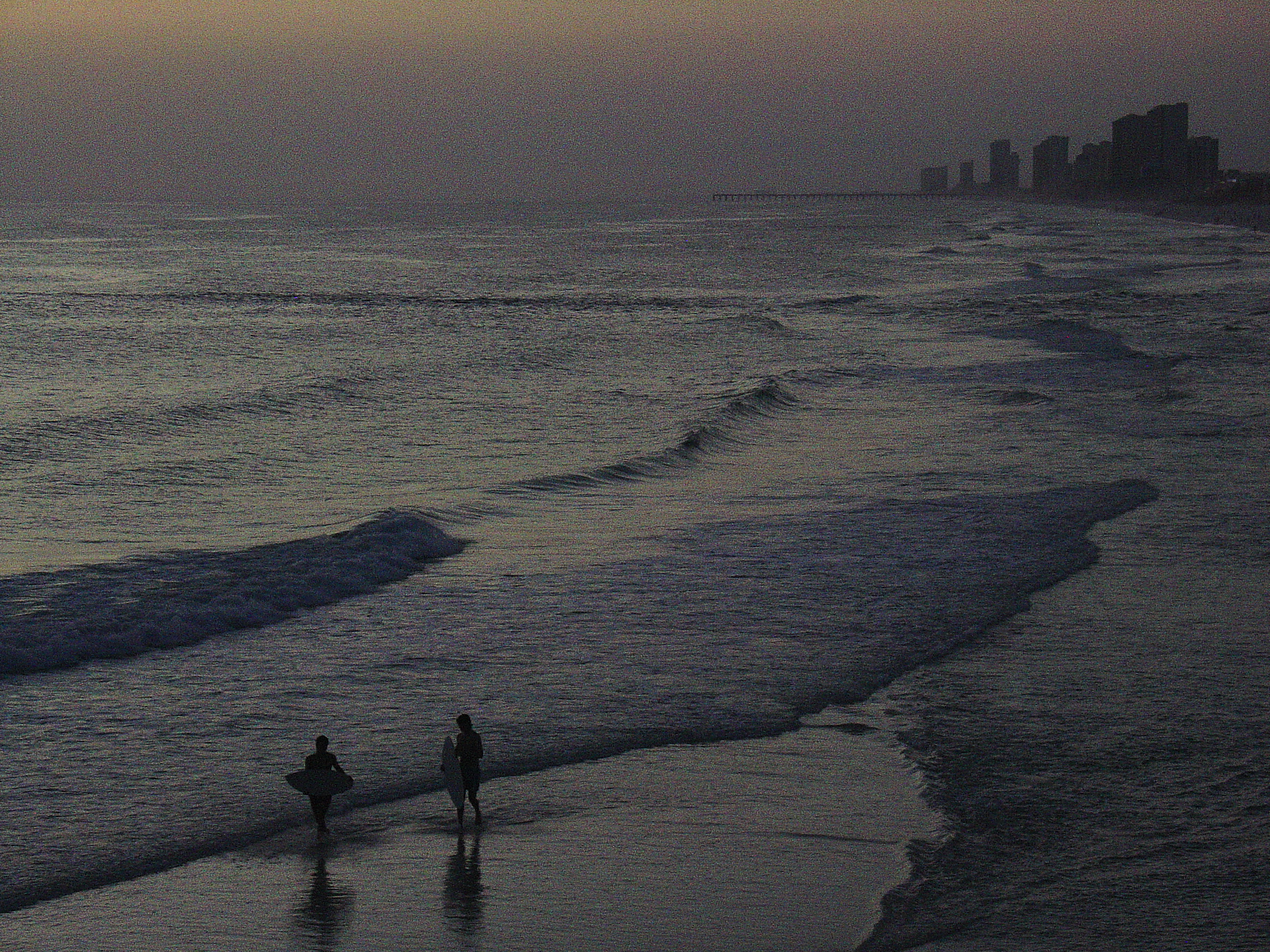 What makes it different isn't the subject. It's the file.
I intentionally raised the ISO higher than the scene needed because I wanted to see what that particular sensor would do under those conditions. The sky breaks apart into grain. The distant buildings soften. The air itself starts to feel textured. The image doesn't become less believable—it becomes more physical.
If I had cleaned the noise away, the photograph would still describe the same place. But it wouldn't feel the same. The file would have stopped saying anything about the camera that made it.
That's really what interests me.
I don't think of those artifacts as mistakes. I think of them as evidence. They aren't marks that I created by hand. They're the camera's response to the conditions I gave it. My role is deciding where to push the camera. The sensor does the rest.
Maybe that's why I don't spend much time worrying about what counts as a digicam.
The camera matters. But the file matters more.